Tiravel
The Vineyard Moon
An Aurelian charter moon where old estates turn stepped valleys into wine, oil, fruit and preserved harvests for markets far away.
Overview
The Record
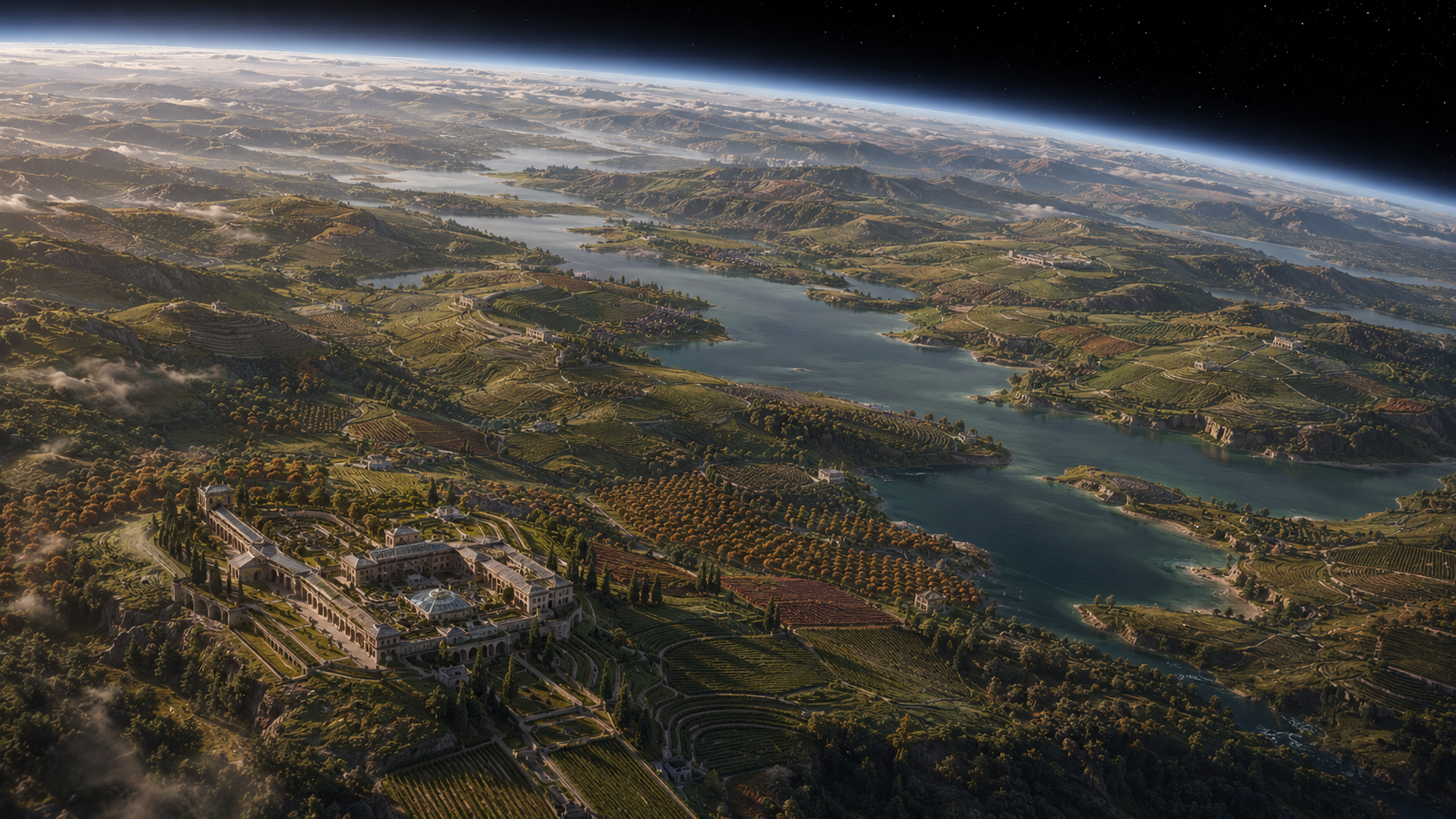
Tiravel grows things that are worth more for the distance they travel. Vineyards and orchards climb the slopes of its temperate basins in stepped rows, between oil groves, stone channels and frost walls. The towns sit on the shoulders of the estates, not on open ground.
The old estates hold the water, the planting rights, the seasonal labor, and the roads that carry a harvest to cellar or port. Every cultivated slope is already spoken for. An estate that wants more must improve the ground it has or bargain for a right, and nobody founds a new city. The high country is left as windbreak, as pasture, or as the line between one claim and the next.
Wine, oil, dried fruit and sealed harvests repay a long journey in a way staple crops do not. They do not feed the Embrace; Aurel does that. Tiravel supplies the tables and contracts that bulk agriculture leaves alone. A failed vintage empties a cellar, and it damages an estate’s credit just as surely.
Aurel’s charter guarantees the outer lanes and the protection the trade moves under. The estates keep authority over what is grown and sold, but agreements beyond the moon are made in Aurel’s name. Tiravel gets reliable reach for a specialized harvest. Its crest stays local, and it is not a sovereign seal.
Political Relationships
Standing
Standing at a Glance
- Political Status
- Chartered Dependency
- Civilization Status
- Inhabited
- Heraldic Standing
- Local Crest
- Principal Power
- Aurel
Tiravel is a chartered agricultural dependency of Aurel. Its estates and agricultural councils govern cultivation, water, harvest labor and the use of land. Aurel guarantees its outside trade and its protection, and speaks for it on anything beyond those local matters.
Tiravel’s wine, fruit, oil and preserved crops sit beside Aurel’s bulk food, not in place of it. The estates may bargain over growing and selling within the charter. External agreements, and guarantees on disputed cargo, are issued in Aurel’s name.
The crest belongs to the estates and agricultural councils. It is a local mark, not a sovereign seal, and it gives Tiravel no voice of its own in system-wide councils.
Locations
Locations on Tiravel
Agricultural Settlement
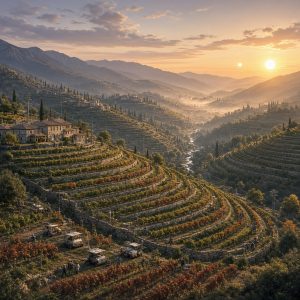
Veylan Steps
Veylan Steps is Tiravel’s largest continuous growing district, where independent estates share water and harvest labor, markets and freight across terraced slopes.
View location →
Cultural Site
Hushvault
Tiravel’s shared bonded cellars, where rival estates keep their harvests private while they mature and bring chosen vintages out for common inspection, contract and ceremony.
View location →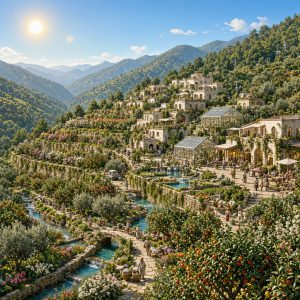
Agricultural Settlement
Auvren Groves
A high-country orchard trust that preserves Tiravel’s oldest cultivars and supplies the graft stock estates need after blight, frost or failed weather.
View location →
Physical Characteristics
Ground and Sky
- Diameter4,620 km
- Mass0.034 Earth masses
- Gravity0.26 g
The air in Tiravel’s cultivated basins is temperate and breathable. Above them, the unworked heights are cooler, drier and windier. Stone channels carry water to wherever vines and orchard stock are planted. Smoke and dust come mostly from pruning fires and from the storms of late season.
Orbit and Time
Path Around Oranth
- Orbital Order175
- Orbital Radius2,410,000 km
- Orbital Period13.956 days
- Rotation334.94 hours
- Inclination0.21 degrees
- Eccentricity0.007
Tiravel is tidally locked to Oranth and turns once in each 13.956-standard-day orbit, so Oranth hangs fixed over the inner hemisphere. Vya and Veo still rise and set, on a long cycle of light. The estates time their pruning, picking, pressing and night work to that cycle and to the regular eclipses within it.
The outer hemisphere never sees Oranth and stays cooler. Most of the large estates lie in inner basins, where the light Oranth reflects softens the long night.
Culture
The Twofold
Estates hire Quickeners for the weeks that decide a vintage, and the ones who keep one rarely say so. Dawn practice governs growth, harvest, and the release of a finished crop.
Travel
Travel Notes
Use an estate port above the receiving valley, and confirm a berth before descent. Valley winds and harvest traffic can close an approach in fair weather. During picking and shipment, buyers, cellar agents and sealed agricultural cargo go first.